Facilities managers and contractors often ask for a commercial cladding spraying cost as a simple square-metre figure. That number is almost meaningless until someone has looked at access, the condition of the sheets, and whether the building has to keep trading. Two elevations with the same floor area can need very different programmes.
This article explains the items that actually move a quotation. It does not invent rates. If you are still deciding whether recoating is even the right job, start with our cladding respray versus replace guide and treat this page as the next step: how a suitable job is priced.
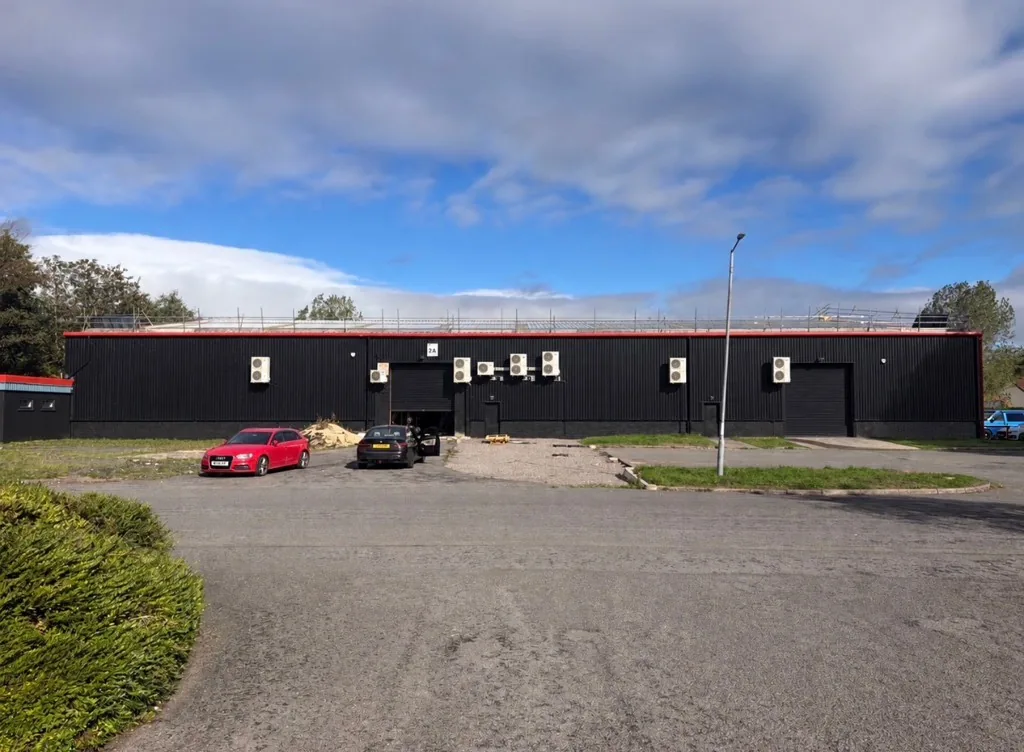
Why a square-metre rate is a weak starting point
Paint volume is only one line in a commercial cladding package. The work also includes cleaning and preparation, protection of doors, rooflights and neighbours, access equipment, weather downtime, and the extra labour that appears when flashings, cut edges or previous coatings are not what the tender assumed.
A rate copied from another site also hides whether that site was empty, whether a mobile elevating work platform could reach every face, and whether corrosion had to be treated before any colour went on. Those are not small variables. They are often the job.
That is why we survey before we lock a figure, and why commercial cladding spraying is specified by the substrate in front of us rather than by a single coating schedule.
What the survey is actually pricing
Substrate and existing coating
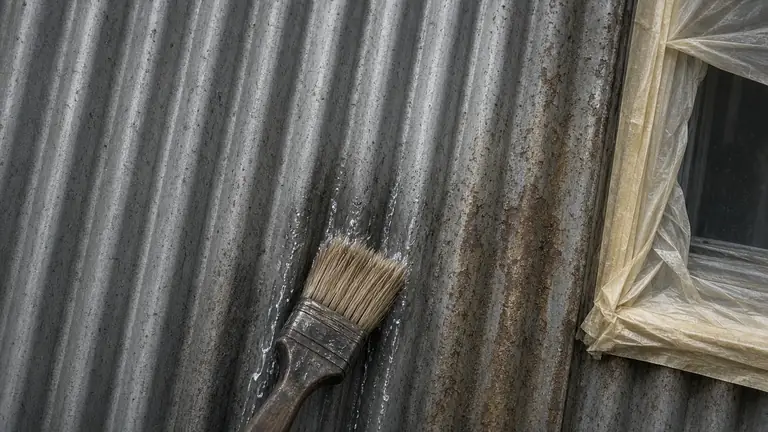
Metal cladding systems are not interchangeable. Profile, age, the original factory finish and any later coatings all affect preparation. A sound sheet with chalking or uneven fade is a different proposition from a sheet with a failing overcoat that has to be removed.
If the previous system is unknown, a test area can be the honest way to proceed. Skipping that step to protect a programme date is how adhesion failures start.
Corrosion, cut edges and repairs
Cosmetic work does not repair the envelope. Soft or perforated panels, failed fixings, water staining that points to leaks, and cut-edge corrosion all need a decision before spraying is specified. Sometimes the right answer is a local panel replacement by others, then recoating. Sometimes the right answer is not to spray at all.
We would rather say that on survey than price a finish over a defect that will reappear.
Measured area versus the surfaces that actually get coated
An elevation area is a useful starting point, not a complete bill of quantities. Returns, flashings, trims, loading-bay reveals, canopy soffits and the junctions around personnel doors all take time. So does masking the things that must not be coated: signage, rooflights, brand totems and neighbouring tenants’ property.
Our published fitness facility exterior project scoped about 384 square metres of cladding as part of a wider mixed package. The measured elevation mattered; so did the windows, shutters, canopy and brickwork band that sat on the same faces.
Access often outweighs the coating
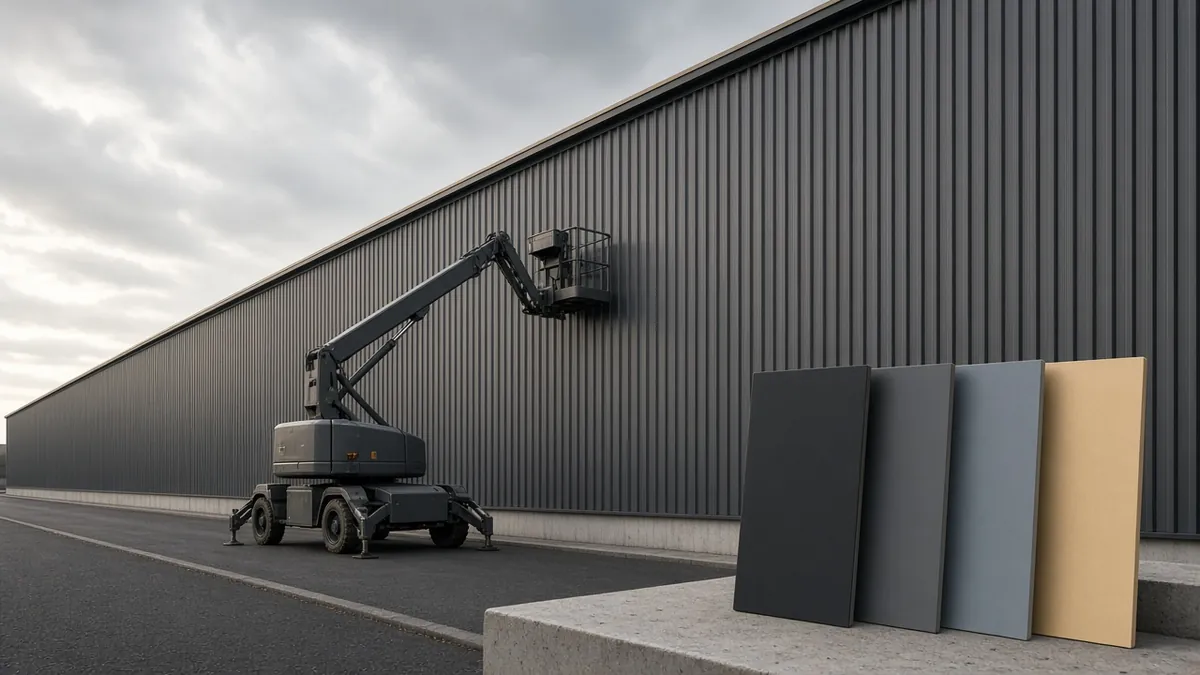
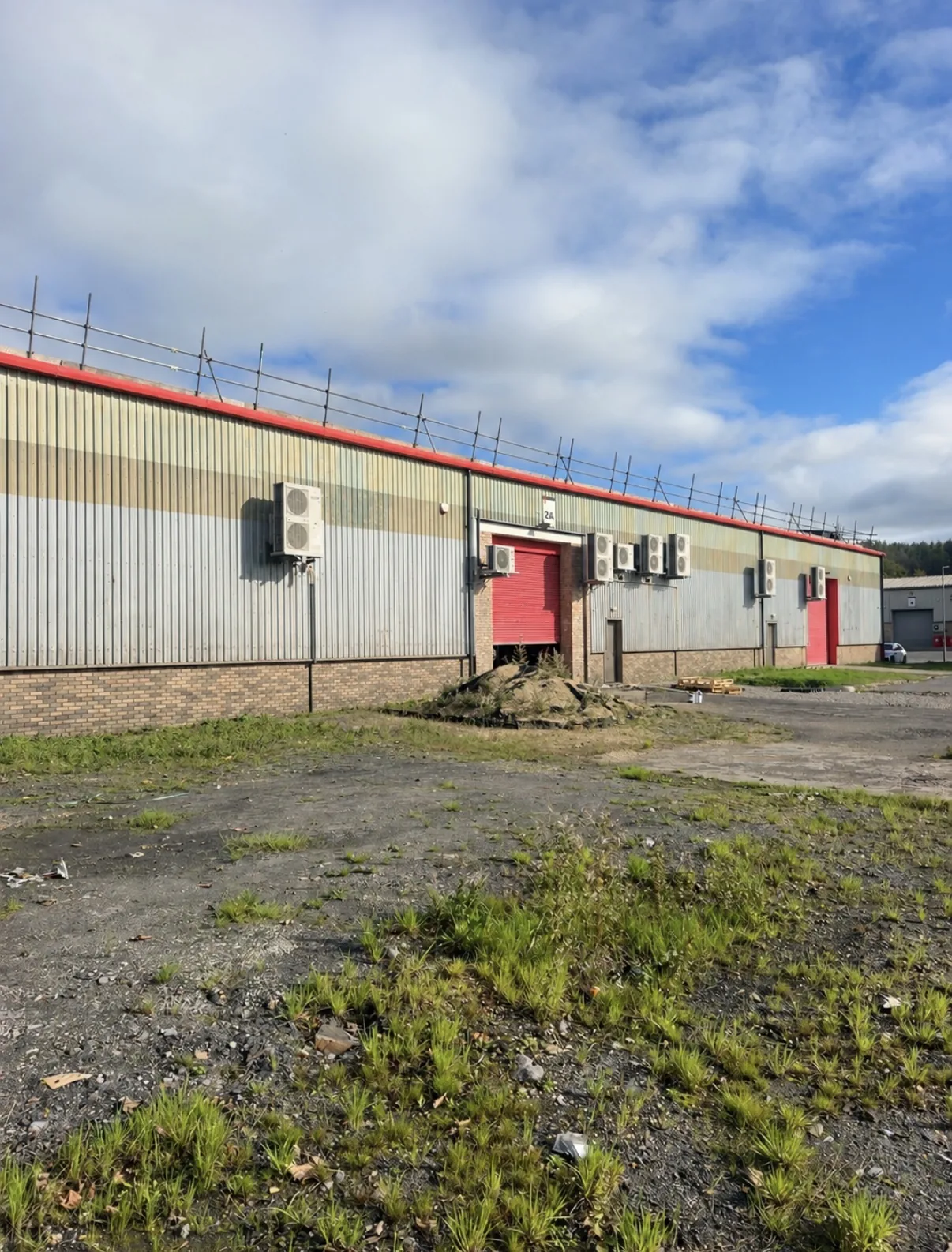
Height, reach, ground conditions and public or vehicle interfaces usually decide the access method. A mobile elevating work platform is efficient on open yards with firm, level standing. Scaffold or another designed access system may be safer or more practical where the platform cannot reach, where the public footway is involved, or where the work needs a longer enclosure.
The access choice affects more than hire cost. It changes how many faces can be prepared and coated in a weather window, where materials are stored, and how the site is segregated. On industrial estates the standing position for a platform often clashes with a tenant’s HGV sweep. That clash has to be designed out in the quotation, not discovered on the first morning.
If the same visit also includes shutters or frames, the access plan should cover those surfaces too. Repeating a setup because the cladding and the doors were tendered as unrelated items is a common way to spend money twice.
Occupied buildings and programme constraints
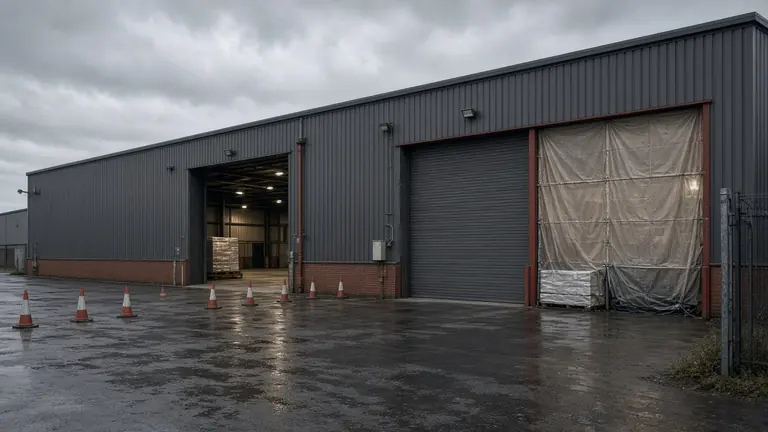
An empty unit is simpler than a live warehouse, gym or trade counter. Occupied sites need phasing around deliveries, customer parking, noise and overspray risk. They may also need weekend or early starts so that loading doors can stay in use during the working week.
None of that is a reason to refuse the job. It is a reason to price protection, attendance and a longer calendar. The coating might be applied in a similar number of productive hours; the programme around those hours is different. Our notes on industrial unit spraying cover how cladding, shutters and frames are often surveyed as one envelope on this kind of building.
Weather and exterior film formation
Exterior coatings need the conditions set out on the product data sheet. Damp sheets, dew, rain arriving before the film has formed, or surfaces that are too cold, stop a day whether or not the diary says otherwise. Coastal and exposed elevations in Wales and the South West see that more often than sheltered inland yards.
A realistic quotation allows for weather. A quotation that assumes every booked day will be a spray day is not doing you a favour. The product systems we use — including those named on our specifications page — still have to be applied inside their stated limits.
Colour, sheen and multi-surface packages
A like-for-like refresh of a sound, previously coated elevation is a different brief from a brand colour change that must also hit roof trims, shutter curtains and window frames. Dark colours and marked sheen changes show preparation marks more clearly. They also make it more obvious if one adjoining surface is left on the old shade.
Where several materials sit on one elevation, each substrate needs its own preparation and coating logic. Treating them as a single paint job is how junctions fail. The warehouses and industrial sector page sets out how we usually approach those mixed envelopes.
RAL or BS references help. So does a sample panel when the existing finish or the light on site makes a visual check useful. Colour matching is part of the work; it should not be left as a guess on the van.
How this sits next to a respray-versus-replace decision
Cost factors only matter once recoating is the right intervention. If panels are mechanically failed, if insulation or vapour control is compromised, or if water is getting in, the envelope needs repair or replacement first. Spraying will not close a leak.
When the sheets are serviceable, recoating can restore colour consistency and avoid the disruption of a reclad. The comparison should include strip-out, disposal, downtime and the access both options need — not only the price of a coating system.
What to send if you want a useful figure
Photographs of each elevation, including close-ups of cut edges, base details and any rust, are the fastest start. Add an approximate area if you already have one, say whether tenants will stay in place, and list the surfaces you want in the same visit. If you have a target RAL and a possession window, include those too.
We reply during business hours and book a survey where the brief looks suitable. If you would rather talk the building through first, send photos or a tender pack.