Most industrial units do not sit empty while their exterior is refreshed. Tenants still need deliveries, staff still need the yard, and roller shutters still have to open and close. Industrial unit spraying on an occupied building is therefore a logistics plan as much as a coating specification.
This article sets out how we plan that work so the building can stay operational. It is written for managing agents, occupiers and the contractors who have to keep a live warehouse or trade unit moving.
Why occupied units are a different job
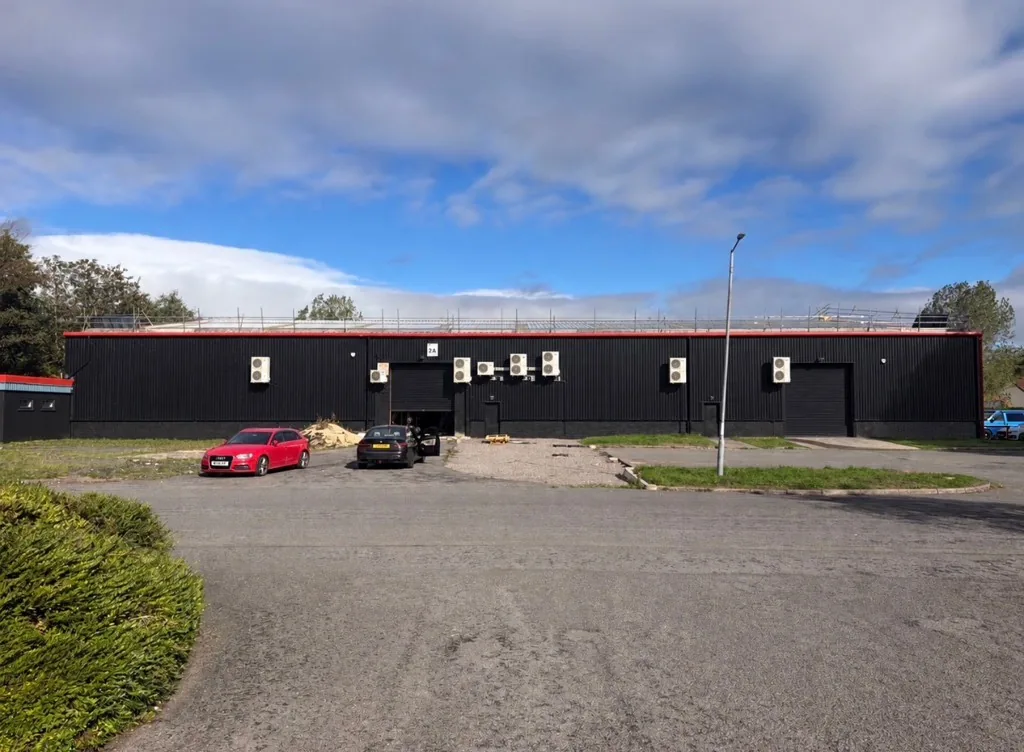
On an empty building the envelope can often be prepared and coated in a continuous sequence. On a live unit every face shares space with vehicles, stored goods and people who did not book a spray team into their week.
The coating system does not change just because someone is still trading. The attendance does. Protection, exclusion zones, the order of elevations and the times when a shutter can stay closed long enough for a film to form all have to be agreed before anyone mobilises. If those points are left to the first morning, the job will stop and start around whichever delivery happens to arrive.
Occupied work is common across warehouses and industrial estates in Wales and the South West. It is manageable when the constraints are treated as design information, not as complaints after the fact.
Mapping vehicle routes and loading doors
Start with how the yard actually works, not with how it looks on a block plan. Where do HGVs swing? Where do vans reverse? Which doors are used all day and which are occasional? Is there a one-way route that cannot be blocked without sending traffic onto a neighbour’s standing?
Access equipment needs firm, level ground and a segregated area. That area often sits exactly where a tenant currently parks or unloads. The survey should mark a temporary route and a temporary parking plan, and someone on the occupier’s side should own that conversation with drivers.
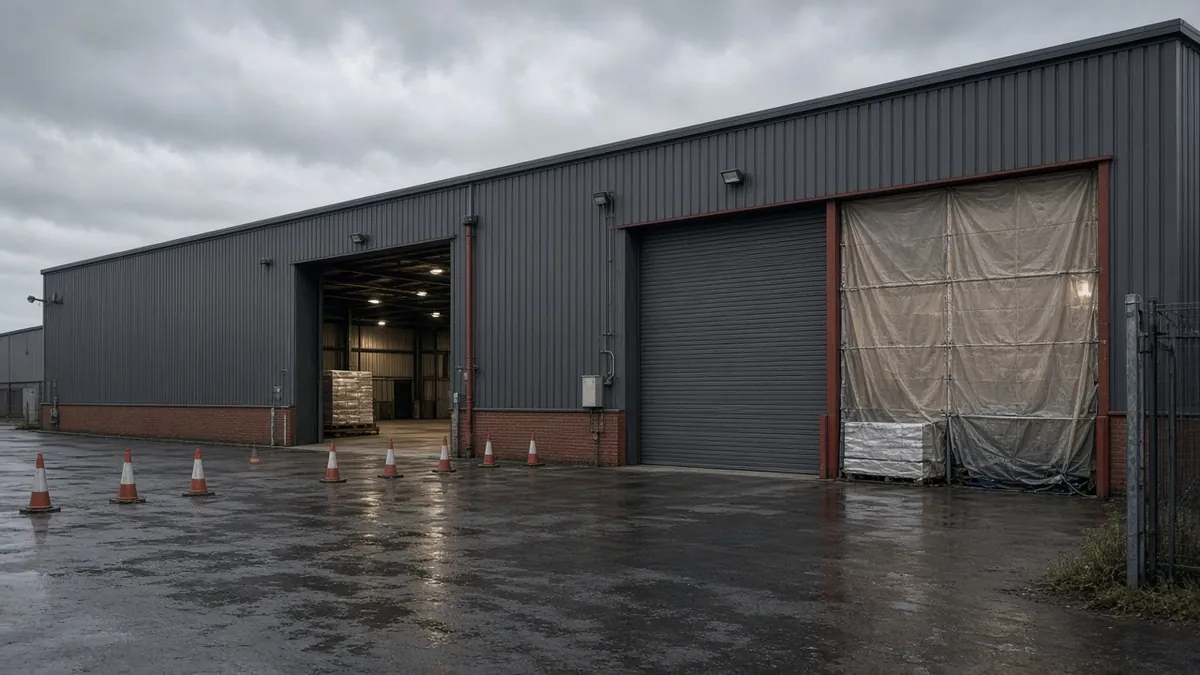
Phasing usually follows the doors. One elevation, or one bay, is isolated while others stay live. Trying to coat every face of a working loading wall in a single pass is how someone ends up asking you to open a shutter that is still within its curing window.
Shutters that still have to work
Roller shutters are part of most industrial envelopes and they are rarely decorative. They provide security at night and access by day. Roller shutter spraying on a live unit only works if the mechanical condition is acceptable and if the curtain can be taken out of service long enough to prepare, coat and form a film.
Bent laths, failed springs or seized guides are not solved by a new colour. Those need an engineer first. If the shutter is sound, the programme should say when it will be closed, how security will be maintained if a bay has to stay open, and how adjoining cladding will be masked while the curtain is worked.
It is often sensible to spray shutters in the same package as the cladding, so the access equipment is hired once and the colours are agreed together. It is not sensible to assume every shutter on the building can be closed on the same morning.
Phasing elevations rather than wrapping the whole building
A useful occupied-unit programme looks like a sequence of possessions, not a single wrap. Typical splits are: gable ends first while the loading elevation keeps trading; then one half of the loading wall; then the other; personnel doors and frames when those openings can be spared; internal items only if they were specified separately and the floor can be protected.
Each possession needs a clear start, a clear finish and a named set of doors that will be available to the tenant in the meantime. Weather sits inside that sequence. If a face is prepared and rain stops the coating day, the exclusion zone may have to remain until the film can be applied. Building that possibility into the diary is better than promising a handover you cannot keep.
Multi-surface packages make phasing more important, not less. Cladding, shutters, steel personnel doors and window frames each have their own preparation. Surveying them together still saves money; applying them as if they were one material does not.
Overspray, neighbouring units and parked vehicles
Industrial estates are close-quarters environments. A neighbour’s vans, a shared yard and a freshly loaded trailer are all within range of poorly controlled spray. The method should set exclusion zones, name who moves vehicles, and say how wind will be judged before work starts on an exposed elevation.
Goods inside an open bay need protection or a door that can actually be closed. So do the tenant’s own products staged in the yard. These are ordinary planning items; they become expensive only when nobody asked about them.
Public liability evidence and a site-specific method statement should go to the managing agent or main contractor before attendance. We carry £5m public liability and provide the onboarding documents contractors normally request — see for contractors for what we typically issue.
Noise, welfare and contractor controls
Spray finishing on a live estate is still construction work. Inductions, welfare, segregation and COSHH information for the products in use should be in place before the first elevation is cleaned down. Occupiers should know which products are being applied and what ventilation or odour to expect if any internal surfaces are in the same brief.
External cladding work is usually less disruptive inside the building than interior spraying, but radios, compressor noise and platform alarms still sit next to office windows and trade counters. Agreeing working hours with the tenant avoids an otherwise well-planned job being stopped at mid-morning.
Weather windows on a live site
Exterior coatings follow the limits on their technical data sheets. Damp metal, dew and arriving rain will stop a day. On an occupied site that stoppage has a second cost: the bay you isolated may now stay isolated longer than the tenant budgeted for.
Plan a reserve window rather than a single unbroken week, especially on exposed Welsh and South West coasts. Tell the occupier in advance which activities (preparation, masking, coating, cure) need the door closed, and which can be paused so a delivery can get in.
What to send us before the survey
Photographs of each elevation, including the loading wall with the doors both open and closed if you can, are the most useful start. Add a shutter count, say whether the unit will stay occupied, and list the surfaces you want quoted together. If there are blackout dates — peak dispatch weeks, landlord inspections, night-time yard activity — write them down.
From that we can say whether an occupied programme looks feasible and what the site visit needs to confirm. If you already have a tender pack or a set of elevations, send them through and we will reply during business hours.